
Deep Tissue Massage
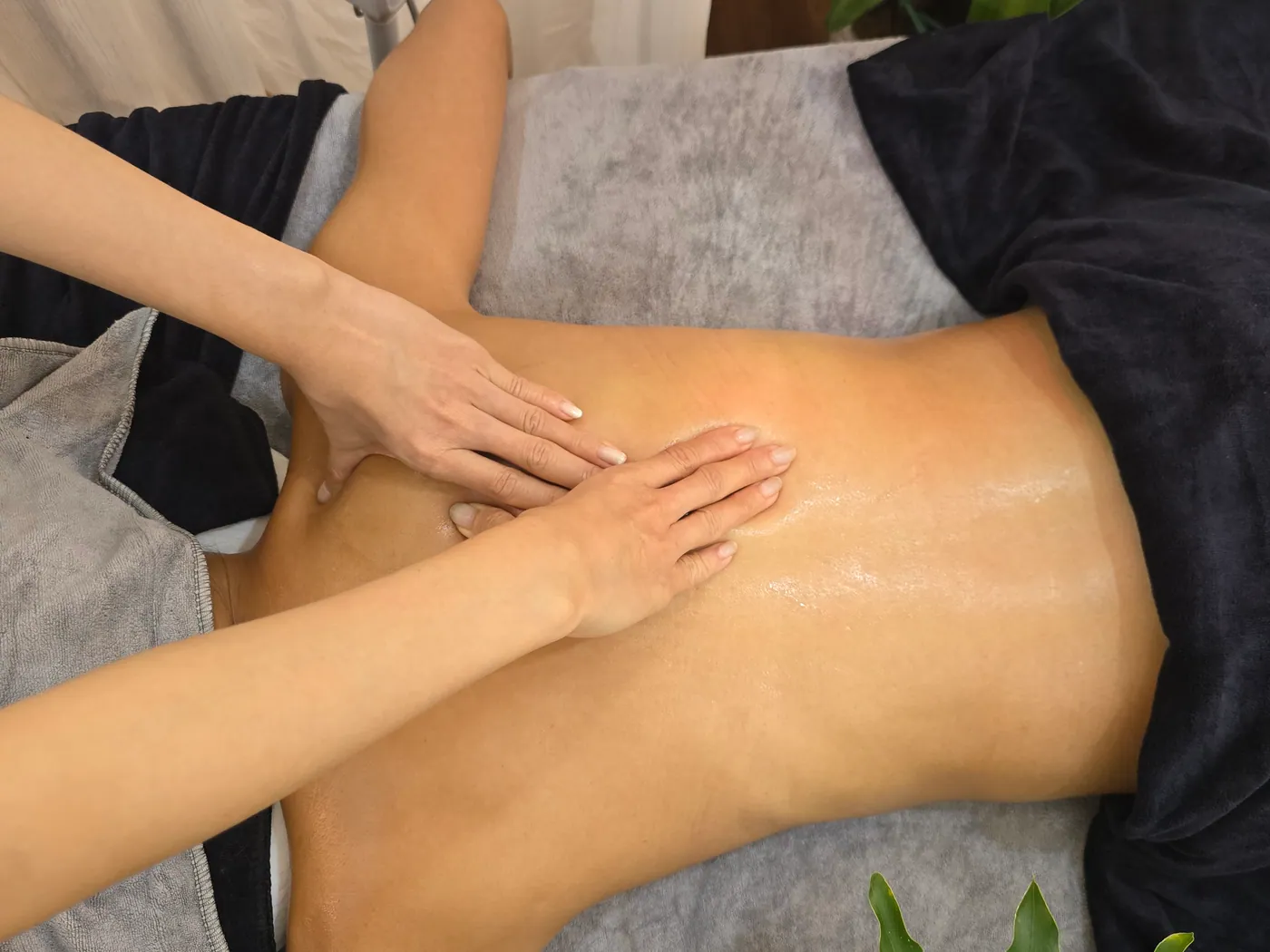
Deep Tissue Massage uses slow, sustained pressure to reach the deeper layers of muscle and fascia where chronic knots form. At Chạm Spa in District 1, Ho Chi Minh City, a session runs 60 to 90 minutes and costs 290,000–420,000 ₫.
- Session Duration
- 60 – 90 Mins
- Price
- 290,000 ₫ – 420,000 ₫
Chạm Spa is at 82/20A Mạc Đĩnh Chi in Tân Định Ward, close to Independence Palace and the Lê Duẩn hotels — convenient if you are looking for Deep Tissue Massage near you in District 1.
The difference between deep tissue and an ordinary firm massage is not simply more force. It is pace. Your therapist works slowly enough that the muscle stops guarding and lets go, then holds pressure on the specific point until the tissue releases, rather than gliding past it. That is why a deep tissue session covers less ground than a relaxation massage but changes far more in the areas it does reach.
This is corrective work rather than pampering. It suits people carrying tension that has been building for months — the shoulder that never quite drops, the lower back that aches by Thursday, the hip that tightened after a long flight and never recovered. It is the most requested treatment in our massage therapy range among desk workers and regular gym-goers in District 1.
Ready to book?
Reserve online through Fresha, or chat with our team on Zalo or WhatsApp.
What happens during a deep tissue session
- You describe the problem. Where the pain sits, how long it has been there, whether it refers anywhere else, and what makes it worse. This shapes the entire session — deep tissue is targeted work, so the more specific you are, the better the result.
- Warming the area. Broader, lighter strokes first. Going straight to full pressure on cold muscle is uncomfortable and less effective, so the first several minutes prepare the tissue.
- Focused release. Slow strokes along the muscle fiber, thumb and forearm pressure held on trigger points, and steady work through the fascia. Your therapist checks pressure as they go.
- Flush and finish. Lighter strokes to settle everything down, plus advice on stretches or heat if a particular area needs follow-up at home.
How much pressure is right?
The pressure should feel intense but productive — the sensation people describe as “hurts good”, where you can still breathe normally and your body stays relaxed. If you are holding your breath, clenching, or gripping the table, it is too much and it becomes counterproductive, because the muscle tightens defensively against it. Say so and your therapist eases off immediately. More pressure is not a better massage.
What deep tissue massage helps with
- Chronic knots and adhesions that have not responded to lighter massage, especially in the upper back, shoulders and glutes.
- Postural strain from long hours at a desk or behind a wheel — rounded shoulders, a tight chest, an aching lower back.
- Restricted range of motion from tissue that has shortened and stiffened over time.
- Training recovery for people who lift, run or cycle regularly and accumulate tightness faster than rest alone resolves it.
- Tension headaches that originate in the neck and upper shoulders rather than in the head itself.
Choosing between 60 and 90 minutes
60 minutes — 290,000 ₫
Right for one or two connected problem areas — typically back and shoulders, or lower back and hips. Deep tissue is slow by nature, so an hour spent properly on one region achieves more than the same hour spread across the whole body.
90 minutes — 420,000 ₫
Right when tension is spread across several regions, or when you want thorough work on a stubborn area plus general full-body attention. Also the better choice for a first deep tissue session, since the extra time allows a gentler build-up before the deeper work begins.
Who it suits — and when to choose something else
Deep tissue suits most healthy adults who want their tension actually addressed rather than soothed. In some cases another treatment serves you better:
- If you want to relax and switch off rather than have specific areas worked on, Relaxation Massage with Oil is the right session.
- If firm pressure normally leaves you sore for days, Hot Stone Therapy Massage achieves much of the same release using heat instead of force.
- If your tension is only in the neck and shoulders our focused Deep Tissue Neck & Shoulder Massage spends the entire session there.
- Tell your therapist first if you are pregnant, have a recent injury, swelling, blood-clotting concerns, osteoporosis, or are taking blood thinners. Deep pressure may need to be reduced or avoided over particular areas.
Before and after your session
Avoid a heavy meal beforehand and drink water afterwards. Mild soreness for a day or two is normal and expected after genuine deep tissue work — it feels like the day after a hard workout, not like injury. It settles on its own, and a warm shower helps.
For long-standing tension, one session gives relief but rarely resolves everything. Most guests working on a persistent problem book every two to three weeks at first, then space sessions out as the area improves.
At a glance
Booking Deep Tissue Massage near you in Ho Chi Minh City? Chạm Spa is at 82/20A Mạc Đĩnh Chi, Tân Định Ward, District 1 — walk in, or reserve a time before you arrive.
Frequently Asked Questions
What is Deep Tissue Massage, and what does it involve?
Deep Tissue Massage uses slow strokes and sustained pressure from the thumbs, knuckles and forearms to reach muscle and fascia below the surface layer. Rather than gliding over a knot, the therapist holds pressure on it until the tissue releases. At Chạm Spa in District 1, Ho Chi Minh City, sessions run 60 or 90 minutes.
How much does deep tissue massage cost in District 1?
A 60-minute session is 290,000 ₫ and a 90-minute session is 420,000 ₫ at Chạm Spa. Pressure adjustments and focused work on specific problem areas are included — there is no surcharge for a more intensive session.
Does deep tissue massage hurt?
It should feel intense but manageable — firm enough that you notice it, never so much that you tense up or hold your breath. If you are bracing against the pressure, the muscle tightens defensively and the treatment works less well. Tell your therapist and the pressure is reduced immediately.
Will I be sore afterwards?
Mild soreness for 24 to 48 hours is normal after genuine deep tissue work, similar to the day after an unfamiliar workout. It should feel like muscle fatigue rather than sharp pain. Drink water, keep moving gently, and it settles on its own.
What is the difference between deep tissue and a normal massage?
A relaxation massage works broadly across the whole body with flowing strokes to calm the nervous system. Deep tissue works slowly on specific areas with sustained pressure to change tissue that has been tight for a long time. One is restorative, the other corrective.
How often should I book a deep tissue massage?
For a long-standing problem area, every two to three weeks works well until the tension eases, then monthly maintenance. For general training recovery or desk-related tightness, once a month is usually enough. Your therapist can advise based on what they find.
How do I book a deep tissue massage at Chạm Spa?
Book instantly through Zalo or WhatsApp, or visit Chạm Spa in District 1, Ho Chi Minh City, near Mạc Đĩnh Chi. Evening and weekend slots fill first, so booking ahead is worthwhile. Please note we are closed on Tuesdays.