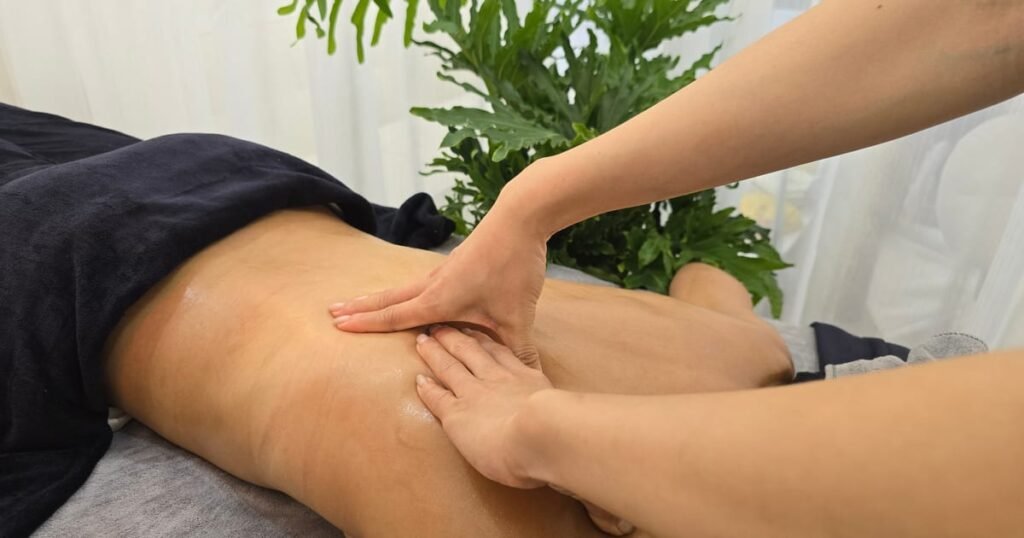

The honest answer to “deep tissue vs Swedish massage” is to choose by goal: Swedish if you want your whole body calmed, deep tissue if one stubborn area needs work. On our menu, Swedish is the Relaxation Massage with Oil: long, flowing strokes at light to medium pressure, 290,000 ₫ for 60 minutes or 430,000 ₫ for 90. Deep Tissue Massage is slow, firm and focused, at 340,000 ₫ or 460,000 ₫. Deep tissue costs 50,000 ₫ more for 60 minutes and 30,000 ₫ more for 90, so the price will not decide it for you. Where your tension sits, and how you want to feel the next morning, will.
What “Swedish” Means on a Saigon Menu
“Swedish” is a label more than a single technique. The US National Center for Complementary and Integrative Health (NCCIH) calls Swedish or classical massage “the core of most massage training programs” in its overview of massage therapy, and Wikipedia’s article on massage notes that the name “is actually only recognized in English- and Dutch-speaking countries, and in Hungary and Israel.” Elsewhere the same style is called “classic massage.” On our menu it is the Relaxation Massage with Oil, whose page lists “Swedish-style flowing strokes with warm oil.” On a Vietnamese-language menu, look for massage thư giãn; how to read a Vietnamese spa menu explains why that is close enough to book on.
Deep tissue is a different way of working, not Swedish turned up. The deep tissue massage page puts the difference in pace: the therapist works slowly enough that the muscle stops guarding, then holds pressure on one point until it releases. That costs coverage. An hour of deep tissue covers one or two connected areas, typically back and shoulders or lower back and hips; an hour of relaxation massage covers the back, legs, arms, neck and shoulders. Nor does pressure alone turn one into the other: our guide to the main types of massage says “a Swedish massage delivered firmly is still a Swedish massage; it does not become deep tissue.” Thai massage, clothed and built on stretching, is a third option we do not offer; see how Thai massage compares with Vietnamese massage.
Deep Tissue vs Swedish Massage, Side by Side
| Relaxation Massage with Oil (Swedish-style) | Deep Tissue Massage | |
|---|---|---|
| Goal | Calm the whole body; it works on the nervous system as much as the muscles | Release tension that has built for months in one or two areas |
| Pressure | Light to medium, never deep | Firm to strong, adjustable at any point |
| Areas in 60 minutes | Back, legs, arms, neck and shoulders | One or two connected areas, such as back and shoulders |
| How you feel after | Calmer, breathing slower; skin softer from the warm oil | Tension in the target area “addressed rather than soothed” |
| Soreness | Not mentioned; pressure stays light to medium | Mild soreness for 24 to 48 hours is normal |
| Best for | First-time guests, general stress, poor sleep, travel fatigue | Chronic knots, postural strain, training recovery, restricted movement |
| Skip it if | You have one stubborn knot: it “will feel lovely but leave it there” | You want to switch off, or firm pressure leaves you sore for days |
| Price | 290,000 ₫ (60 min), 430,000 ₫ (90 min) | 340,000 ₫ (60 min), 460,000 ₫ (90 min) |
The 90-minute versions differ in purpose: relaxation at that length gives the same coverage “without any sense of hurry,” while deep tissue at that length suits tension spread across several regions, or a first deep tissue session that needs a gentler build-up.
How to Choose: Six Questions, in Order
Stop at the first yes.
- Are you pregnant? Book neither; both pages send you to Pregnancy Massage, which uses side-lying positioning throughout.
- Is this your first professional massage? Book the relaxation massage. The types guide is unequivocal: “If you have never had a massage, Swedish or relaxation with oil is the right first booking every time.”
- Does firm pressure usually leave you sore for days? The deep tissue page itself points you to Hot Stone Therapy Massage, which “achieves much of the same release using heat instead of force,” at 340,000–460,000 ₫.
- Is all the tension above your mid-back? Book the Deep Tissue Neck & Shoulder Massage, covered below.
- Can you point to the spot? If one area has nagged for months, such as the shoulder that never quite drops or the lower back that aches by Thursday, book deep tissue.
- None of the above, and you mainly want to switch off? Book the relaxation massage.
Soreness After Deep Work
Deep tissue should feel intense but manageable. The types guide draws the line: “productive discomfort is a deep ache you can breathe through, while sharp pain means the pressure is wrong and you should say so.” Afterwards, mild soreness for 24 to 48 hours is normal; the deep tissue page compares it to “the day after a hard workout, not like injury.” If it is the word “pain” that worries you, there is a separate guide to whether Vietnamese massage is painful.
Cochrane’s review of massage for low-back pain found “no reports of serious adverse events”; the side effect reported most often was increased pain intensity, in 1.5% to 25% of participants. NCCIH says the risk of harm appears to be low but notes rare serious reports, some of which “involved vigorous types of massage, such as deep tissue massage.” So tell your therapist first about a recent injury, swelling, blood-clotting concerns, osteoporosis or blood thinners, as the deep tissue page asks. And if your back hurts more sharply the day after than before, or the pain reaches further down the leg, our lower back pain guide says to stop booking deep work and seek medical advice.
First Massage? Start With Swedish
Our pages agree on the order: Swedish-style first, firmer work later, because nothing about the relaxation massage is intense or surprising. You undress only as far as you are comfortable, a towel covers you throughout, and falling asleep is not impolite; what happens during a massage, from undressing to making requests answers the rest. A first session also teaches you what pressure you like. If you find yourself wanting slow pressure held on one spot, book deep tissue next time, at 90 minutes; the types guide warns that “rushing it produces the soreness without the release.”
After a Flight or a Day of Walking
A long flight mostly loads the legs; the NHS’s page on swollen ankles, feet and legs lists “standing or sitting in the same position for too long” among the common causes. Our travel recovery guide explains that fluid pools in the lower legs during hours of sitting, and that most visitors are footsore by about day three of walking the city; a foot massage in District 1 is the direct answer to both. For whole-body travel fatigue, the guide’s arrival-day advice is to “book something gentle rather than nothing at all,” and the relaxation massage, whose page lists “recovery from travel,” is that option.
Deep tissue earns its place for a problem you brought with you, such as “the hip that tightened after a long flight and never recovered,” in the deep tissue page’s words. After a motorbike food tour, the travel guide says the next-day complaint is “almost always upper back and shoulders,” which points to the neck and shoulder session.
Sleep and Stress: The Case for the Gentler Option
If the real problem is that you cannot switch off, the relaxation massage is built for it. Its page lists poor sleep, “particularly for guests who find it hard to switch off in the evening,” while deep tissue asks you to breathe through a deep ache, which suits a knot better than a wind-down. Two cautions. Our guide to sleep and stress in a hot city says massage helps “with the physical load” but is “not treatment for burnout itself.” And the research is thin: NCCIH summarizes a fibromyalgia review in which massage improved pain, anxiety and depression but had no effect on sleep disturbance.
If you feel the cold in air-conditioning, Warm Candle Relaxation Massage is the warmer version of the same gentle style, with oil melted from a massage candle poured warm over the skin. Its page is blunt about the limit: for deep stubborn knots, “warmth alone will not shift them.” Heat is not used during pregnancy.
When the Tension Lives in Your Neck and Shoulders
The neck and shoulder session’s page makes a point worth knowing before you book full-body deep tissue: most full-body massages give the neck and shoulders perhaps fifteen minutes. The Deep Tissue Neck & Shoulder Massage spends the whole appointment on the neck, shoulders, upper back, base of the skull and scalp, at the same 340,000 ₫ or 460,000 ₫. For screen-related tension, the page is candid that the posture that built it “is still waiting at your desk”; our office syndrome guide covers the desk changes that make relief last.
What the Evidence Says About Either Style
There is no solid evidence that one style beats the other. In NCCIH’s summary, the Agency for Healthcare Research and Quality looked at six studies comparing types of massage for low-back pain and found the evidence “insufficient to show whether any types were more effective than others.” Cochrane found massage “better than inactive controls for pain and function in the short-term, but not in the long-term follow-up,” and graded the evidence low or very low. The one hint of a difference is small: NCCIH reports that in a comparison of styles for fibromyalgia, most had beneficial effects on quality of life, but the two Swedish massage studies, with 56 participants in total, did not show benefits.
So deeper is not automatically more effective, and either style’s benefits are mostly short-term, which is why spacing matters; how often to book a massage, by goal covers it. NCCIH’s advice applies to both: “Don’t use massage therapy to postpone seeing a health care provider about a medical problem.”
Which One to Book
To come out calmer, book the Relaxation Massage with Oil; to change one area, book Deep Tissue Massage, at 90 minutes the first time. The full massage menu with prices is on one page, and every session begins with a conversation about what your body needs, so describing the problem works as well as naming a technique.
We are at 82/20A Mạc Đĩnh Chi in Tân Định Ward, District 1. Open every day, 09:00–21:00. Book online through Fresha, or on Zalo or WhatsApp at 0986 837 471.
Frequently Asked Questions About Deep Tissue and Swedish Massage
Deep Tissue vs Swedish Massage: Which Suits a Stiff Lower Back?
Usually deep tissue, if the stiffness sits in one place and has built up over months. But if the ache comes from long hours of sitting, the types guide notes that targeted neck and shoulder work often addresses the cause better than working the lower back directly, and that hot stone suits stiffness spread across the whole back. Persistent back pain, in that guide’s words, warrants a doctor rather than a spa.
Can a Swedish Massage Be Done Firmly Enough to Replace Deep Tissue?
Firmer, yes; deeper in the same sense, no. The strokes stay broad and flowing however firm they are, and our relaxation massage caps pressure at light to medium. If you want slow pressure held on one knot, book Deep Tissue Massage.
Is Deep Tissue a Sensible Choice for a Very First Massage?
It is not what we suggest; the relaxation massage lets you learn what pressure you like first. If you already know you want deep work, book 90 minutes, which the deep tissue page recommends for a first deep tissue session because the extra time allows a gentler build-up.
How Long Does Soreness Last After Deep Tissue Compared With Swedish Massage?
Mild soreness for 24 to 48 hours is normal after genuine deep tissue work, and it settles on its own; water and a warm shower help. The relaxation massage page does not mention soreness at all. Pain that is sharp, or worse the next day than before the session, is not normal soreness: stop booking deep work and seek medical advice.
After a Long-Haul Flight, Is Swedish or Deep Tissue Massage the Better Booking?
Swedish-style, or a foot massage, since long flights mostly load the lower legs and feet. Save deep tissue for an area that is still tight days later, or for after a training block, and keep it away from the evening before a long walking day.
Does a Pricier Massage at Chạm Spa Mean Deeper Pressure?
No. Warm Candle Relaxation Massage costs exactly what Deep Tissue Massage costs, 340,000 ₫ for 60 minutes and 460,000 ₫ for 90, yet its pressure is light to medium. Hot Stone Therapy Massage, at the same 340,000–460,000 ₫, relies on heat rather than force. Choose by the pressure each treatment page lists, not by price.
Should I Avoid Deep Tissue Massage If I Take Blood Thinners?
Tell your therapist before the session starts. The deep tissue page lists blood thinners and blood-clotting concerns among the reasons deep pressure may need to be reduced or avoided over particular areas, and NCCIH counts a blood clot among the rare serious side effects reported. If in doubt, ask your doctor first, or book the gentler relaxation massage.
If Chạm Spa has looked after you, it helps other guests to hear about it. Leave a review