Prenatal massage is a side-lying, lighter-pressure massage adapted for pregnancy, and a review of 12 randomized trials found only minor, short-lived side effects in healthy pregnancies, so with your midwife’s or doctor’s agreement it is a reasonable thing to book. Three questions decide whether it suits you: which trimester you are in, what the therapist will keep away from, and whether anything in your own pregnancy says to wait. Saigon adds a fourth, heat.
What Prenatal Massage Is and How It Differs From a Regular Massage
A regular massage assumes you can lie face-down and take firm pressure almost anywhere. Pregnancy changes two things.
Position. The review described below says that when the woman is lying down, the massage should be done in the lateral position, on her side, and that sitting positions are also possible. In practice that means pillows under the bump, between the knees and under the top arm.
Pressure and places. The same review says women should not be massaged on the abdomen, and that deep tissue massage should generally be avoided to prevent detaching blood clots. What it studied was relaxation massage, the long, flowing Swedish-style kind. If you are still choosing between styles, our guide to the main types of massage shows how they differ and flags the ones to skip in pregnancy.
What the Research Says About Safety
The clearest single source we found is a systematic review of relaxation massage during pregnancy. It covers 12 randomized controlled trials that compared relaxation massage with standard care. The main benefits it reports are less stress, less back and leg pain, and lower depression and anxiety. Only two of the 12 trials reported any side effects, and those were minor and temporary; in one, 2% of women in the massage group reported tiredness after treatment.
Seven of the 12 trials excluded women with difficult pregnancies or existing complications and five did not say, so the findings describe healthy pregnancies. The review says women with complications should be massaged only after consulting their obstetrician. And its summary states that all the women were at least 12 weeks pregnant when the studies began, so it tells us little about the early weeks.
The NHS page on complementary therapies in pregnancy does not mention massage, but its general rules apply to it. Not all “natural” remedies or complementary therapies are safe in pregnancy, you should tell any practitioner that you are pregnant before discussing treatment, and none of them replaces your regular antenatal care.
Massage While Pregnant, Trimester by Trimester
No source we opened gives a week number at which massage becomes acceptable, so the table sets out what the sources can tell you and what to ask.
| Trimester | What the guidance says | What to ask |
|---|---|---|
| First (weeks 1 to 13) | The review’s trials began at 12 weeks or later, so its findings do not cover early pregnancy. Many practitioners prefer to wait until the second trimester. | Your midwife or doctor first. Whether the therapist treats clients this early at all, and whether any oil will be used. |
| Second (weeks 14 to 27) | Inside the range the trials covered. Lie on your side, no abdominal massage, no deep pressure. | How you will be positioned, how firm the pressure will be, and whether the legs are worked lightly. |
| Third (weeks 28 to 40) | None of the sources we opened sets a cut-off week. Positioning matters more as the bump grows, and so do the warning signs below. | Whether you can be repositioned at any moment, how to sit up slowly afterward, and whether your midwife knows about any swelling or headaches. |
That includes weeks 35 to 38 and beyond. The answer is the same as at any other stage: ask your midwife or doctor first, and keep the position and pressure rules. In the last weeks, session length matters as much as the week: some venues build a longer visit around changing position so that no single posture is held throughout, as a pregnancy package built around changing position does.
When to Ask a Doctor First, and When to Call One Instead
Ask your midwife or doctor before booking if your pregnancy has been called high-risk, if you have been advised to limit activity, if you have had bleeding, or if you have ever had a blood clot.
Some symptoms are for a doctor, not a therapist. The NHS lists these symptoms of pre-eclampsia:
- a severe headache that does not go away with simple painkillers
- vision problems, such as blurred vision or seeing flashing lights
- pain below the ribs
- sudden swelling of the face, hands or feet
- feeling very unwell, being sick, or heartburn that medicines do not ease
If you are pregnant and have these symptoms, the NHS says to get urgent help and contact your maternity unit. Do not book a massage to deal with them.
Clots are the other concern. The NHS lists pregnancy among the times you have a higher chance of deep vein thrombosis, with throbbing pain in one leg, usually the calf or thigh, swelling in that leg, and red, blue or darkened skin around the painful area. Shortness of breath or chest pain alongside those signs needs emergency care. The massage review adds that leg massage over an unrecognized clot can be life-threatening, and advises against working the deep muscle of the arms and especially the legs.
Heat, Oils and Long Sessions
Warmth. Pregnancy already raises how much heat you make, and Saigon rarely drops below 25°C. Our guide to pregnancy in a hot climate explains why swelling arrives earlier here and advises avoiding anything that raises your core temperature substantially, particularly in the first trimester. For a massage, that means a cool room, no hot stones or heated wraps, and no walk in the midday sun on the way there.
Oils and scent. Sensitivity to smell is common in pregnancy, so say so if a scent bothers you and ask for the oil to be unscented or left out. Check any essential oil with your midwife or doctor; the NHS warns that not all natural products are safe in pregnancy.
Length. Lying on one side for a long time gets uncomfortable late in pregnancy. Ask to be repositioned whenever you want, and try a shorter session first.
Before You Book a Prenatal Massage
- Ask your midwife or doctor. Mention any bleeding, high-risk label, activity limit or history of clots.
- Know your week. Say how many weeks you are when you book, not on arrival.
- Ask how you will lie. The answer should be on your side with pillows, or seated, as the review describes, not face-down.
- Ask about pressure and places. You want gentle to moderate pressure, nothing on the abdomen and no deep work on the legs.
- Ask about warmth and oils. A cool room, no heat treatments, and the oil unscented or minimal if smells bother you.
- Ask about the therapist. How often do they treat pregnant clients, and what training do they have? The NHS advice is to consult a qualified practitioner.
- Prepare for the session. Eat something light, use the bathroom first, wear clothes that are easy to change out of, and sit up slowly afterward. Our guide to what to do before a massage covers the day-of details.
Where a Spa Fits Once Your Doctor Agrees
If your midwife or doctor agrees, a spa can be one way to ease the aches of the second and third trimesters. At Chạm Spa, pregnancy treatments start from the second trimester onward, so nothing in this article is a reason to book earlier.
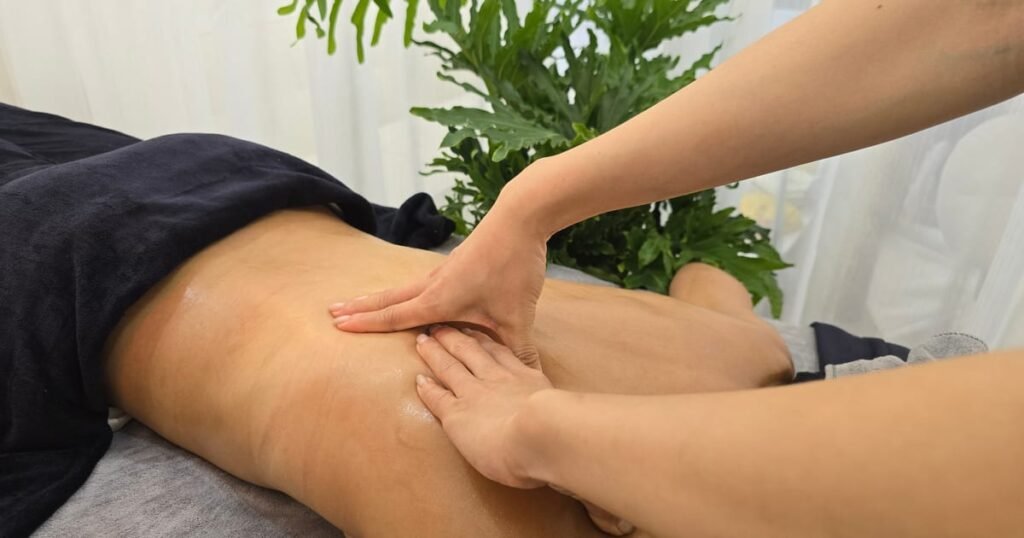
For the massage on its own, a side-lying pregnancy massage in District 1 runs 60 to 90 minutes and costs 340,000 ₫ for 60 minutes or 460,000 ₫ for 90. You rest on your side on cushions, never face-down and never flat on your back for any length of time. The abdomen is not massaged, pressure stays gentle to moderate, and the ankle and wrist pressure points traditionally avoided in pregnancy are worked around. The page asks you to check with your doctor first if your pregnancy is high-risk or you have been advised to limit activity.
For an occasion or a longer visit, a pregnancy package of massage, gentle hair care and a facial takes 120 minutes and costs 530,000 ₫. It is never face-down, the facial uses products checked as appropriate for pregnancy with no peels, retinoids or strong actives, and no heat of any kind is used.
Heat treatments are not used in pregnancy at Chạm Spa, so the heated options among our massage therapies in District 1 wait until after the birth, when your doctor or midwife has cleared you. When you book, tell us how many weeks you are and mention any scent sensitivity.
The Short Version
A massage in pregnancy comes down to position, pressure and permission. Your midwife or doctor goes first, the abdomen and deep leg work stay out, and a severe headache, vision changes, sudden swelling, pain in one leg or breathlessness mean a doctor, not a booking.
We are at 82/20A Mạc Đĩnh Chi in Tân Định Ward, District 1. Open every day, 09:00–21:00. Book online through Fresha, or on Zalo or WhatsApp at 0986 837 471.
Frequently Asked Questions About Massage in Pregnancy
Is Prenatal Massage Safe in the First Trimester?
The research does not settle it. The main review’s summary says all the women were at least 12 weeks pregnant when the studies began, so it says little about earlier weeks, and many practitioners prefer to wait until the second trimester. If you are in the first trimester and want a massage, ask your midwife or doctor first.
Does Massage in Pregnancy Really Help With Back Pain?
The review lists less back and leg pain among the benefits of relaxation massage during pregnancy, alongside less stress, depression and anxiety. That describes the trial results, not a promise for any one person. Back pain that is new, severe or one-sided is worth raising with your midwife.
Can You Have a Prenatal Massage at 36 Weeks or Later?
None of the sources we opened sets a week at which massage must stop. What changes late in pregnancy is comfort and checking: lying on your side with pillow support matters more, you should be able to change position at any moment, and your midwife should know about any swelling or headaches before you book.
Which Parts of the Body Should Not Be Massaged in Pregnancy?
The review says the abdomen should not be massaged, deep tissue massage should generally be avoided, and the deep muscle of the arms and especially the legs should be left alone. Some traditions also avoid certain pressure points at the ankles and wrists. Gentle strokes on swollen ankles and feet are a different matter from deep pressure.
When Should You Skip a Massage and Call a Doctor Instead?
Skip it and contact a doctor or your maternity unit for a severe headache that painkillers do not ease, blurred vision or flashing lights, pain below the ribs, sudden swelling of the face, hands or feet, or throbbing pain and swelling in one leg. Shortness of breath or chest pain alongside leg symptoms needs emergency care.
Can a Partner Give You a Massage at Home While Pregnant?
The same cautions apply at home as in a treatment room: lie on your side with pillows, keep the pressure light, leave the abdomen alone and avoid pressing deeply into the legs. Skip essential oils unless your midwife agrees.
Is It Normal to Feel Tired or Light-Headed After a Massage in Pregnancy?
Tiredness is the side effect the review mentions: in one trial, 2% of women in the massage group reported it after treatment. Light-headedness can come from sitting up too fast after lying on your side, so rise slowly and drink some water. Dizziness that does not pass is a reason to call your midwife or doctor.
If Chạm Spa has looked after you, it helps other guests to hear about it. Leave a review