
A legitimate therapeutic spa in District 1 has four things you can check before walking in: a printed price menu with fixed durations, a reception area separate from the treatment rooms, a Google Maps listing with recent photo reviews from mixed clientele, and no street solicitation. Venues advertising “VIP” or “body-to-body”, or refusing to quote a price up front, are not therapeutic spas.
The four checks that settle it
Every check below can be made from your phone before you leave the hotel. That is the point of them — by the time you are standing on the pavement deciding, you have already lost most of your leverage.
| # | Check | Where to check it | What a pass looks like |
|---|---|---|---|
| 1 | Printed price menu | Website, Google Maps photos, Facebook | Named treatments, fixed durations, prices in VND |
| 2 | Separate reception | Street-view photos, listing photos | A front desk you can see from outside, not a staircase to a closed door |
| 3 | Recent photo reviews | Google Maps, last 3 months | Mixed clientele — women, couples, local customers |
| 4 | No solicitation | Reviews, street view | Nothing about touts, “extras”, or being approached outside |
Four passes and you can book with confidence. One clear fail is enough to move on — there are several hundred alternatives within a kilometre.
Why District 1 has both kinds of venue
Prostitution is illegal in Vietnam. It also exists, and a portion of it operates under massage signage, which is why an adult-service venue and a therapeutic spa can appear side by side in the same search results.
That is the actual problem a traveler faces in District 1: not danger, but discovery. Two entirely different businesses compete for the same words. The therapeutic trade is far larger and serves locals, expats, couples and families every day. The other trade is a minority, it is legible once you know the signals, and the worst realistic outcome of misreading it is an awkward exit. If you are asking the broader question first, our guide to whether massage in Vietnam is safe covers the three risks that actually exist.
Red flags, in the order you’ll encounter them
Most guides give you an unsorted list. In practice the signals arrive in sequence, and knowing which stage you are at tells you how much it costs to walk away.
Before you leave the hotel
Look at the Google Maps listing rather than the website. Check whether any photo shows a price menu. Check whether the business name or description contains “VIP”, “body-to-body” or “adult”. Read the three most recent reviews and search them for the words tip, extra and service — reviews are where this information actually lives. A venue with no published prices anywhere online in 2026 has made a choice.
On the street
A therapeutic spa is visible from the pavement: signage, a lit reception, a door that people walk in and out of. Warning signs are blacked-out windows, premises accessible only by an unmarked staircase, no ground-floor signage at all, and anyone standing outside inviting you in. Legitimate spas in District 1 do not need to solicit — they are booked.
At reception
Ask to see the menu and ask the total price including any service charge. A therapeutic spa will hand you a printed menu and answer in one sentence. You should also be asked something about yourself — where you hold tension, how firm you like the pressure, whether you have injuries. That intake question is the single most reliable live signal there is. Look for a locker or lockable drawer while you are standing there.
In the room
You should be covered by a towel or sheet throughout, with only the area being worked uncovered. The door should close properly. Nobody should raise “extras”, at any point, in any wording. If any of these fail, the section below tells you what to do.
What a legitimate first visit actually looks like
For balance, here is the whole sequence at a proper District 1 spa, so you know what you are comparing against.
You arrive, take your shoes off and change into slippers. Reception confirms the treatment, the duration and the price — the same numbers you were quoted when you booked. You are asked where you hold tension and how firm you like the pressure, and possibly about injuries, pregnancy or skin conditions. Your valuables go into a locker or a lockable drawer, or into a basket that comes into the room with you.
You are shown to the room and left alone to change. You undress to your comfort level, usually to underwear, and lie under the towel or sheet provided. The therapist knocks before entering.
During the session you are draped continuously. The therapist checks the pressure early and adjusts when asked. Nothing is uncovered except the area being worked on. Afterwards you are left to dress, offered water or tea, and you pay the price on the menu. Tipping is your decision and not built into the bill — our guide to Vietnamese spa etiquette covers the customs.
That is the entire experience. Our guide to what actually happens during a massage covers the room mechanics in more detail, including what you can ask for.
How to leave if something feels wrong
Almost nobody writes this down, and it is the most useful thing on this page.
If the session has not started, leave and owe nothing. You do not need a reason and you do not need to give one. “I’ve changed my mind, sorry” is a complete sentence. Collect your shoes and go.
If the session has started, say stop. A professional therapist stops immediately. Get dressed, go to reception, pay for the time actually used at the menu rate, and leave. You are not obliged to explain, argue or justify.
Deal with money at reception, not in the treatment room. If the bill differs from the menu, point at the menu. If you booked over Zalo or Fresha, the confirmation message settles it in seconds.
Getting away. Around Bùi Viện after dark, a Grab is faster and simpler than walking, and you can wait for it inside a convenience store rather than on the pavement.
Afterwards, leave an honest review. In this market, Google Maps reviews are the mechanism that actually works — they are how the next traveler reads the signals.
Which streets are which
District 1 is not uniform, and knowing the character of each area does more for you than any general advice.
Bùi Viện and Phạm Ngũ Lão. The backpacker district, and the highest concentration of everything — some of the best-value spas in the city sit alongside the venues this article is about. Volume is the defining feature. By day it is straightforward; after dark it needs more discernment because there is simply more of everything.
Lê Thánh Tôn and the Little Japan blocks. Professional, long-established, frequently oriented toward Japanese customers with menus and signage to match. Quality is generally high. Some venues here work primarily in Japanese, so check the listing language before assuming English service.
Đề Thám and the streets around Bến Thành. Heavy tourist footfall, wide price range, and the area where you are most likely to be quoted a tourist price. Check the printed menu against our Ho Chi Minh City massage price guide.
Đa Kao and the Mạc Đĩnh Chi end. Residential and noticeably quieter. Fewer walk-in venues, more businesses serving regulars, generally better value for the same standard. This is where locals and long-term residents go.
No street in District 1 is unsafe. They differ in density and in how much checking you need to do.
Booking channels, ranked by how much they protect you
The channel you use determines how much evidence you have if anything is disputed. That is the ranking criterion.
- Zalo or Fresha. You get the price, treatment and duration in writing, from the business, before you arrive. Screenshot it. This is the strongest position you can be in and it takes two minutes.
- The spa’s own online booking form. Written confirmation, usually by email. Nearly as good.
- Calling from the Google Maps listing. You reach the business directly and can confirm the price verbally, but you have no record of it.
- Hotel concierge. Convenient, and the hotel has a relationship it does not want to damage. You may pay a margin.
- Walking in. Fine at a venue that passed the four checks. Weakest position if anything goes wrong.
Our guide to booking a massage in District 1 covers the Zalo process step by step, including a message template. Any spa worth booking will confirm in writing — that is as true of the priciest massage in Ho Chi Minh City as of the cheapest shop on Đề Thám.
Blind massage centers are not what you think
One correction, because it costs travelers real value.
Venues signed massage khiếm thị are blind massage centers, staffed by trained visually-impaired therapists. They exist because of a decades-long social movement to create skilled employment for blind people in Vietnam, and the Blind Massage Association on Cống Quỳnh Street in District 1 is the best-known example in the city. Therapists are formally trained in anatomy, acupressure and client care. Blind association centers run formal vocational massage courses, and most graduates find work.
A number of visitors see the signage, do not recognize it, and assume it means something dubious. It does not. For firm, precise bodywork at low cost, these centers are among the best value in District 1. Our guide to Vietnamese venue types explains the full landscape.
Frequently asked questions
Is massage in Ho Chi Minh City safe?
Yes. The therapeutic massage trade in Ho Chi Minh City is large, legitimate and used daily by locals, expats and visitors. The risks that exist are commercial rather than physical — venue type, price disputes and unsecured belongings — and all three are avoidable with checks made before you arrive.
How do I know if a massage place is legitimate?
Check four things before you go: a printed price menu with fixed durations, a reception area separate from the treatment rooms, recent Google Maps photo reviews from mixed clientele, and no mention of touts or “extras” in reviews. All four are verifiable from your phone in under two minutes.
What does “body-to-body massage” mean?
It is one of the standard advertising terms used by adult-service venues rather than therapeutic spas, along with “VIP” and “adult”. A therapeutic spa describes its treatments by technique — deep tissue, hot stone, aromatherapy — and publishes durations and prices for each.
Should I book ahead or walk in?
Book ahead for evenings and weekends in District 1, which fill first. Booking over Zalo or Fresha also gives you the price and duration in writing, which is the single best protection against a disputed bill. Mornings and early afternoons are usually walk-in-able.
Is it safe for a woman to get a massage alone in District 1?
Yes, and it is routine — most therapists at District 1 spas are women. Request a female therapist when you book rather than at reception, and choose a venue with a private room and a printed menu. Our guide for solo female travelers covers this in full.
What should I do if a therapist offers extras?
Say no and end the session. Get dressed, go to reception, pay for the time used at the menu rate and leave. You are not obliged to explain yourself or negotiate. Afterwards, leave an honest Google Maps review — it is what warns the next person.
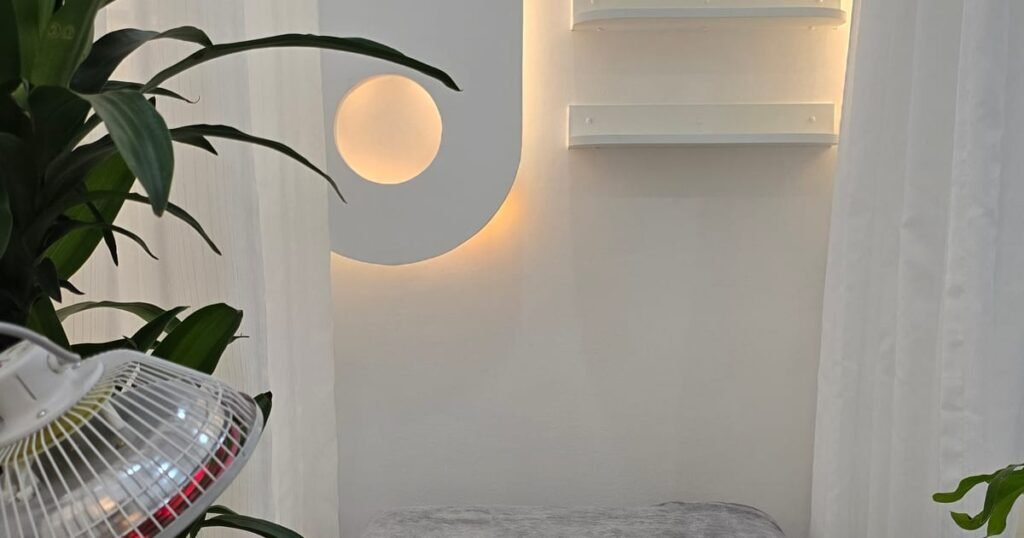
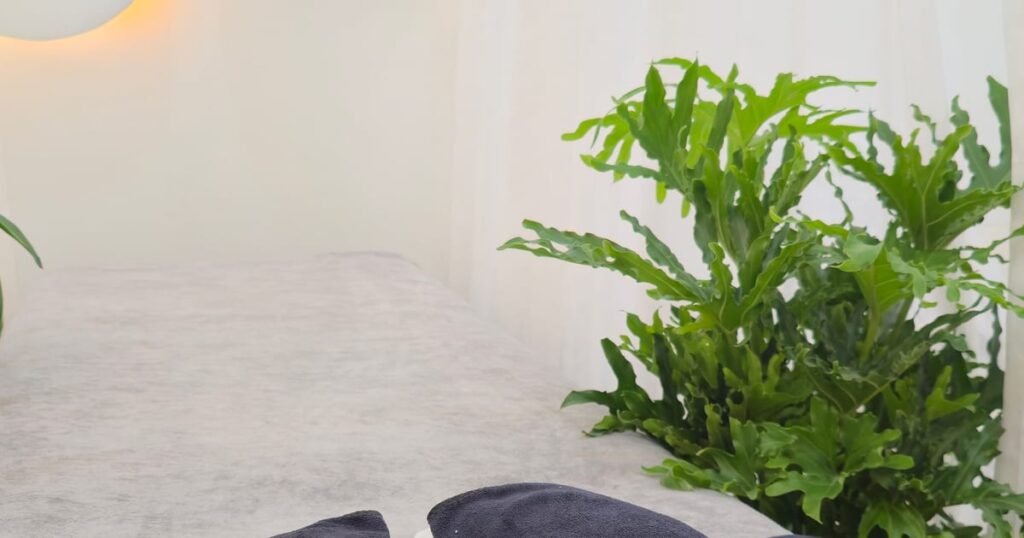
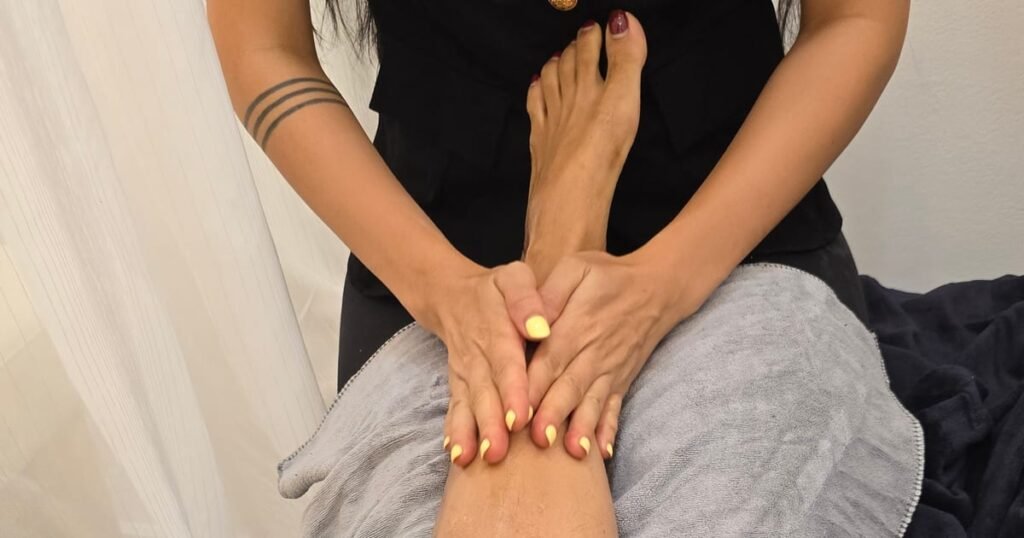
Chạm Spa is in District 1 near Mạc Đĩnh Chi, in the quieter Đa Kao end of the district. Every treatment has a published price and duration — massage therapies in District 1, foot massage in District 1 and spa retreat combos in District 1 for two. Rooms are private, and you can book online and have the price confirmed in writing before you arrive. We are closed on Tuesdays.
Use the four checks on this page wherever you go. They work on us as well as on anyone else — that is rather the point of publishing them.
If Chạm Spa has looked after you, it helps other guests to hear about it. Leave a review