Vietnam has four distinct kinds of massage venue and the signage tells you which is which. “Spa” usually means a therapeutic business with a printed menu and private rooms. “Tẩm quất” means traditional Vietnamese massage, often firm and often budget. “Massage khiếm thị” is a blind massage center staffed by trained visually-impaired therapists. Venues advertising “VIP” or “body-to-body” are a fourth category and not therapeutic.
The four venue types at a glance
Most confusion about massage in Vietnam comes from treating every venue as interchangeable. They are not. The four categories differ in price, room setup, technique and whether you need to book — and the sign above the door tells you which one you are looking at.
| Signage | What it means | Typical 60 min | Room setup | Book ahead? |
|---|---|---|---|---|
| Spa | Therapeutic business, printed menu, oil treatments, facials and body work | 350,000–450,000 ₫ | Private room, sometimes curtained bay | Yes for evenings and weekends |
| Tẩm quất | Traditional Vietnamese massage, firm, acupressure and percussive technique | 150,000–300,000 ₫ | Curtained bay or shared floor | Usually walk-in |
| Massage khiếm thị | Blind massage center, trained visually-impaired therapists | 150,000–250,000 ₫ | Curtained bay, occasionally private | Usually walk-in |
| “VIP” / “body-to-body” | Adult-service venue using massage vocabulary | No published price | Not disclosed | — |
Prices are typical Ho Chi Minh City ranges as of August 2026 and vary by district.
“Spa”: therapeutic, menu-driven, private rooms
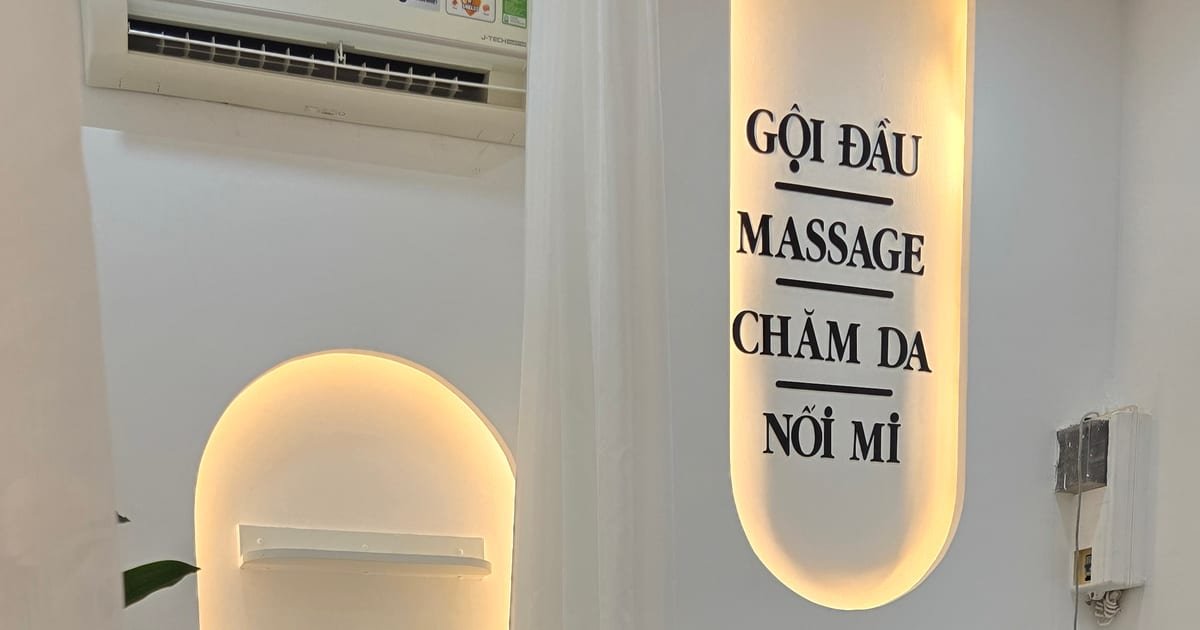
The word “spa” carries a narrower meaning in Vietnam than in much of the West, where it can mean anything from a nail bar to a resort wellness center. Here it usually signals a specific business model: a printed menu with named treatments and fixed durations, an intake conversation before the session, oil-based bodywork, and rooms with doors.
A spa is also where you find treatments that are not massage at all — facials, body scrubs, herbal head-spa rituals and the traditional add-ons like herbal patches and infrared warmth. If you want more than bodywork, this is the category that offers it.
Spas cost more than the other therapeutic categories, and what you are paying for is largely privacy, consistency and the conversation at the start. The hands-on skill is not necessarily better than at a good tẩm quất shop.
“Tẩm quất”: traditional Vietnamese massage
Tẩm quất is the indigenous Vietnamese massage tradition, built on acupressure and percussive technique rather than the long flowing strokes of Swedish massage. It is frequently performed with you clothed or partly clothed, often on a mat or a simple table, and it is firm. The rhythmic tapping and clapping sounds carry through a curtain and alarm first-time visitors who do not know what they are hearing.
This is the everyday massage of Vietnam — the one locals get, at prices locals pay. It rewards travelers who want the real thing and are not precious about a private room. You can ask for lighter pressure at any point, and a good therapist will adjust immediately.
Our guide to traditional Vietnamese massage covers the technique and its history in full.
“Massage khiếm thị”: blind massage centers
Venues signed massage khiếm thị are staffed by visually-impaired therapists, and they are one of the genuinely distinctive things about massage in Vietnam.
They exist because of a deliberate social movement. As Vietnam developed, community organizations, religious groups and blind associations set up training and employment programs so that visually-impaired people had a skilled trade rather than dependence. Massage became the vehicle. Today these centers operate in almost every province, and the Blind Massage Association on Cống Quỳnh Street in District 1 is the best-known reference point in Ho Chi Minh City.
The therapists are trained. Instruction covers anatomy, acupressure technique, therapeutic massage and client care, and it is formal rather than informal apprenticeship. The blind associations award vocational massage certificates after months of training. Many travelers report that the work is more precise than what they get at mid-range spas — therapists tend to find tight areas quickly and stay on them.
What to expect in practice: firm pressure, often little or no oil, curtained bays rather than private rooms, minimal English, and prices well below spa rates. Sessions are usually 45 to 60 minutes and you generally walk in rather than book.
One correction worth making plainly. A number of visitors see the signage, do not recognize it, and assume it indicates something dubious. It does not. This is the most common venue-type mistake tourists make in Vietnam, and it means people skip some of the best-value skilled bodywork in the country.
“VIP”, “body-to-body” and street solicitation
Prostitution is illegal in Vietnam. Some adult-service venues nonetheless operate under massage signage, which is why they appear in the same search results as therapeutic spas.
The signals are consistent: “VIP”, “body-to-body” or “adult” in the name or description, no published prices anywhere, covered windows, upstairs premises with no ground-floor signage, staff soliciting on the pavement, and reviews that mention tips or “extras”. A therapeutic venue of any of the three categories above does none of these things.
This is a discovery problem rather than a danger. Our guide to finding a legitimate massage spa in District 1 covers the full checklist.
Which one should you choose?
There is no ranking here. There is a match between what you want and what each category does well.
Choose a spa if this is your first massage in Vietnam, you want a private room with a door, you want an oil treatment, or you want a facial, body scrub or head-spa ritual alongside the massage. Book ahead for evenings and weekends. A typical spa menu runs to six or so massage therapies in District 1 plus separate facial treatments in District 1, premium head spa in District 1 and body skin treatments in District 1.
Choose tẩm quất if you want the traditional Vietnamese experience, you do not mind firm pressure, and a curtained bay is fine. This is the most culturally authentic option and the cheapest way to get genuinely skilled work.
Choose a blind massage center if you want strong, precise bodywork at low cost and do not need a private room. For pure muscle work, this is frequently better value than a mid-range spa, and it is honest to say so.
Choose a spa if you are booking for two. Shared rooms for couples are a spa product; the other categories are generally not set up for it.
Frequently asked questions
What is blind massage in Vietnam?
Blind massage — massage khiếm thị — is bodywork performed by trained visually-impaired therapists at centers created to provide skilled employment for blind people in Vietnam. Therapists receive formal training in anatomy, acupressure and client care. The work is typically firm, low-oil, in curtained bays, and priced well below spa rates.
Is blind massage better than a regular massage?
It depends what you want. For firm, precise muscle work at low cost, many travelers find blind massage centers as good as or better than mid-range spas. What they do not offer is a private room with a door, oil-based relaxation treatments, or add-on services like facials and head-spa rituals.
What does tẩm quất mean?
Tẩm quất is traditional Vietnamese massage, built on acupressure and percussive technique rather than long flowing strokes. It is usually performed with you clothed, on a mat or simple table, and it is firmer than most Western bodywork. The rhythmic tapping sounds are part of the technique.
How much does blind massage cost in Ho Chi Minh City?
Roughly 150,000–250,000 ₫ for 45 to 60 minutes as of August 2026, depending on the district and the treatment. That is well below the 350,000–450,000 ₫ typical of a mid-range District 1 spa. Most centers take cash and operate on a walk-in basis.
What is the difference between a spa and a massage parlor in Vietnam?
A spa is a therapeutic business with a printed menu, fixed durations, private or curtained rooms and an intake conversation. “Massage parlor” is not standard Vietnamese signage — venues advertising “VIP” or “body-to-body” with no published prices are adult-service businesses using massage vocabulary, and they are a separate category entirely.
If you are working out where to go in District 1, our guide to finding a legitimate massage spa covers the street-by-street picture and the checks worth making before you walk in. Chạm Spa is a spa-category venue — a spa in District 1, Ho Chi Minh City near Mạc Đĩnh Chi, with private rooms and published prices on every treatment page. You can book online and have the price confirmed before you arrive. We are closed on Tuesdays.
If Chạm Spa has looked after you, it helps other guests to hear about it. Leave a review