Traditional Vietnamese massage (Tẩm Quất) is a dynamic, therapeutic practice rooted in acupressure and energy-balancing principles. Unlike gentle, relaxation-focused modalities, it uses vigorous techniques — clapping, percussive tapping, and targeted pressure point work — to release deep-seated muscle tension and restore circulation. For international travelers dealing with physical fatigue or jet lag, exploring authentic massage therapies in District 1, Saigon at Chạm Spa offers rapid physical recovery, a refreshed feeling, and a genuine cultural wellness experience.
What is Traditional Vietnamese Massage (Tẩm Quất)?
Traditional Vietnamese massage, known locally as tẩm quất, is a long-established therapeutic practice embedded in the country’s wellness heritage. Historically it was passed down through generations and often performed by practitioners trained to locate tight fascia and blocked energy points through touch alone — a skill built over years rather than taught from a manual.
Unlike spa treatments designed purely for surface-level relaxation, tẩm quất is functional and results-driven. It is built to ease everyday aches and tension, relieve heavy fatigue, and reset the body’s musculoskeletal state through deep, direct pressure. It belongs to the broader tradition of traditional Vietnamese medicine, which developed alongside — and in dialogue with — Chinese medical thought over many centuries.
The History and Cultural Significance of Qi (Energy Flow)
The philosophical foundation of traditional Vietnamese massage draws on Eastern medical thinking, particularly the concept of Qi (or Chi) — the vital energy understood to flow along meridians through the body. In this framework, pain and systemic fatigue arise when those channels become blocked and the body’s natural balance is disturbed.
Vietnamese massage uses precise acupressure points to work on these blockages. By manipulating those points, therapists aim to restore the body’s natural sense of balance. Where other regional traditions incorporate assisted stretching or meditative elements, tẩm quất stays firmly practical: its objective is relieving muscle tension, improving circulation and restoring physical energy through grounded, hands-on work.
Core Techniques Used in Vietnamese Massage
The execution of Vietnamese massage is noticeably different from Western modalities such as Swedish massage. It is sharp, rhythmic and dynamic, combining intense manual therapy with thermal elements to support tissue recovery.
Clapping, Percussion, and Acupressure Point Manipulation
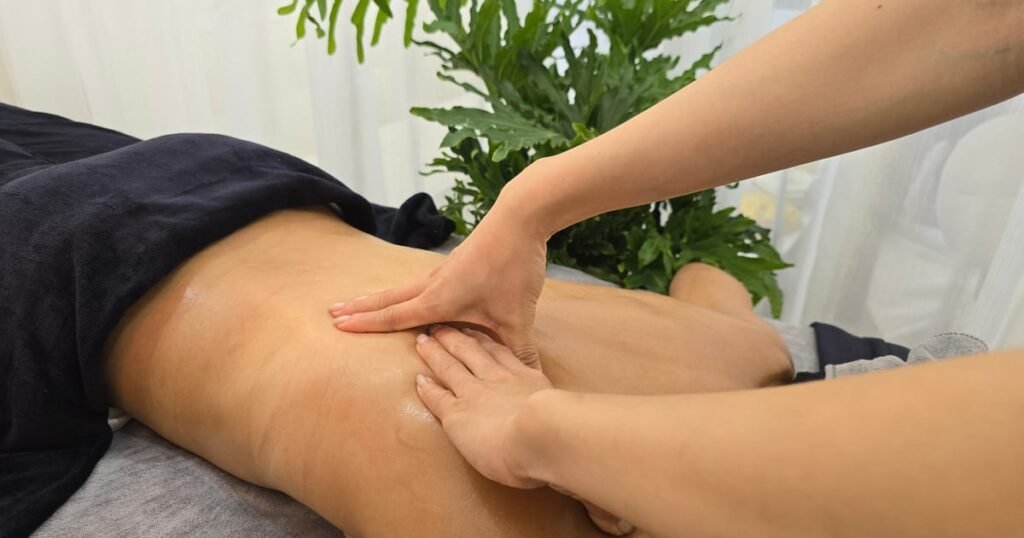
Acupressure work is the backbone of the treatment. Therapists use thumbs, fingers, knuckles and elbows to apply firm, sustained pressure to points along the body’s meridian lines. That targeted pressure breaks down dense muscle knots and stimulates the nervous system, and it can feel sharp to anyone unaccustomed to deep tissue work.
Following the acupressure phase, the therapist moves into a signature sequence of percussive movements — rhythmic clapping, tapping, chopping and drumming. Using the edges of the hands, loose fists or cupped palms, they deliver synchronised strikes across the back, shoulders and legs. This percussive phase produces the distinctive sound the treatment is known for, and it is designed to wake dormant tissue, stimulate circulation and give an invigorating physical reset.
Hot Cupping Therapy (Giác Hơi) and Hot Stone Integration
To extend what the hands can do, practitioners often add thermal and suction therapies for deep-tissue tension. Cupping therapy, known locally as giác hơi, uses small glass or plastic cups placed on the back and shoulders. The vacuum lifts the skin, drawing stagnant blood toward the surface and easing deep muscle stiffness. It frequently leaves temporary circular marks and acts as a strong circulatory stimulant.
Hot stone work is the other common thermal component. Smooth heated stones are placed along the spine, waist or shoulders; the warmth penetrates the muscle fascia, softens tension and expands blood vessels. At Chạm Spa this is available as Hot Stone Therapy Massage (60–90 minutes, 300,000 ₫ – 440,000 ₫).
Herbal Compress Applications (Lemongrass & Ginger)
Heat and botanicals are frequently combined to deepen the soothing effect. Warm herbal pouches are applied directly to sore areas, packed with Vietnamese herbs such as lemongrass, ginger and basil. The heat relaxes muscular rigidity and eases joint stiffness while the aromatics work on the senses. Chạm Spa offers this as a herbal patch add-on (50,000 ₫), alongside traditional ginger scraping (50,000 ₫) — a ginger-oil gua sha along the back that deliberately leaves red-purple marks for a few days. See the full traditional therapy add-ons for what can be layered onto a session.
Tẩm Quất Compared With Other Asian Massage Styles
Travelers often ask how Vietnamese massage differs from the Thai or Balinese treatments they may already know. The distinctions are real and worth understanding before booking.
| Style | Signature technique | Typical intensity | Clothed or oiled | Choose it for |
|---|---|---|---|---|
| Tẩm Quất (Vietnamese) | Acupressure plus rhythmic percussion; often with cupping or herbal heat | Firm to strong | Oiled, or through a towel | Deep fatigue, heavy stiffness, a fast physical reset |
| Thai | Passive, yoga-like stretching along energy lines | Firm, with joint movement | Clothed, no oil | Flexibility and range of motion |
| Swedish / Relaxation | Long, flowing gliding strokes with oil | Light to medium | Oiled | Stress relief and a first massage |
| Deep tissue | Slow, sustained pressure into deeper muscle layers | Strong, localised | Oiled | Specific chronic knots and problem areas |
| Balinese | Blend of gentle stretching, acupressure and long strokes | Medium | Oiled | A middle ground between relaxation and therapy |
If tẩm quất sounds stronger than you want, a relaxation massage with oil (60–90 minutes, 270,000 ₫ – 400,000 ₫) covers the same body areas at a much gentler pressure.
What Happens During a Session
A first traditional session is easier if you know the shape of it in advance. Expect roughly this sequence:
- A short consultation. The therapist asks where you hold tension, how firm you want the pressure, and whether anything should be avoided — recent injuries, pregnancy, skin conditions, blood thinners.
- Warming. Broad strokes across the back and shoulders to raise tissue temperature before any deep pressure.
- Acupressure. Thumbs, knuckles and elbows working point by point along the meridian lines, holding each until the tissue softens.
- Percussion. The rhythmic clapping and tapping phase across the back, shoulders and legs — brisk, loud, and surprisingly relaxing once you settle into it.
- Optional thermal work. Hot stones, a herbal compress or cupping, depending on what you booked and what the therapist finds.
- Closing. Lighter integration strokes, then a few minutes to sit up slowly. Water afterwards is standard.
Speak up about pressure at the moment you notice it rather than at the end. “Strong but breathable” is the target; sharp or electric sensations are not part of the treatment.
The Physiological and Mental Benefits
Traditional Vietnamese massage offers benefits that go beyond temporary relaxation.
Improving Blood Circulation and a Refreshed Feeling
The firm but controlled combination of pressure points, gliding pressure and percussive tapping increases vascular dilation. Improved circulation delivers oxygen and nutrients more efficiently to tired tissue. The same manipulation stimulates lymphatic flow, which is why the overwhelming sensation afterwards is lightness rather than drowsiness.
Relieving Muscle Tension and Fatigue
For anyone carrying chronic occupational stress or the physical toll of long-haul travel, tẩm quất offers immediate, tangible relief. Working on myofascial restrictions triggers the release of endorphins, the body’s own pain-modulating and mood-lifting compounds. That response dulls localised aches, reduces circulating cortisol, and reliably improves sleep quality in the nights that follow — which is precisely what a jet-lagged body needs. Broader research on what massage therapy can and cannot do is summarised by the US National Center for Complementary and Integrative Health.
Who It Suits — and When to Choose Something Gentler
Tẩm quất suits people who want a strong, functional treatment: desk workers with locked shoulders, travelers stiff from a twelve-hour flight, anyone who finds gentle massage pleasant but ineffective. It is a genuinely invigorating experience rather than a soporific one.
Choose something gentler if this is your first massage of any kind, if you bruise easily or take blood-thinning medication, if you have a skin condition or recent injury over the area, or if what you actually want is to fall asleep on the table. If you are pregnant, book pregnancy massage specifically — side-lying, cushioned, and with certain points avoided — from the second trimester onward. And if your tension sits almost entirely in the neck and shoulders, the focused deep tissue neck & shoulder massage spends the whole session there instead.
Massage at Chạm Spa is a cosmetic and relaxation service, not medical treatment. If you have an acute injury, unexplained pain or a diagnosed spinal condition, speak to a doctor before booking.
Experiencing Authentic Wellness in Ho Chi Minh City
Ho Chi Minh City is a high-energy metropolis where urban exploration and a tropical climate combine to wear travelers down quickly. Building a genuine wellness stop into the itinerary is a practical decision, not an indulgent one — and it works best early in a trip, while jet lag is still resetting.
Chạm Spa is at 82/20A Mạc Đĩnh Chi, Tân Định Ward, District 1 — house 20A inside alley 82, which is why the room stays quiet despite the location. The spa is open Monday and Wednesday to Sunday, 10:00–19:30, closed Tuesdays, and books through Zalo, WhatsApp or online booking. Beyond massage, the menu extends to a premium herbal head spa (from 120,000 ₫ for 30 minutes) and foot massage and reflexology for city-tired feet.
Conclusion
Tẩm quất is not a softer version of a Western spa massage — it is a different tradition with a different objective. Where relaxation massage aims to calm, traditional Vietnamese massage aims to change how your body feels by the time you stand up: looser, warmer, and noticeably lighter. The acupressure does the structural work, the percussion wakes the tissue, and the herbal heat makes both more effective.
For visitors to Ho Chi Minh City it is also one of the more genuinely local experiences available in District 1, and it is at its most useful early in a trip, when jet lag and long-haul stiffness are still fresh. If firm pressure is not what you are after, the comparison table above points to the gentler alternatives on the same menu.
Chạm Spa is open Monday and Wednesday to Sunday, 10:00–19:30 at 82/20A Mạc Đĩnh Chi, District 1. Explore the full range of massage therapies, or read more from the therapists on the Chạm Spa Journal.
Frequently Asked Questions (FAQ)
How is traditional Vietnamese massage different from Thai massage?
Traditional Vietnamese massage (tẩm quất) focuses on targeted acupressure, deep kneading and rhythmic percussive techniques such as clapping and tapping to release tension and improve blood flow. Thai massage is a more active experience built around passive, yoga-like stretching and joint mobilisation to improve flexibility. Vietnamese massage is usually performed with oil; Thai massage is done clothed and without oil.
What does Tẩm Quất actually mean?
Tẩm quất is the Vietnamese term for the country’s traditional therapeutic massage — a folk practice built on acupressure and percussion rather than the gliding strokes of Western massage. It is not simply the Vietnamese word for “massage” in general; it names a specific technique and tradition, and it is characteristically firmer and more rhythmic than the spa treatments most visitors will have experienced elsewhere.
Does cupping therapy (Giác Hơi) hurt?
During a giác hơi session you will feel a tight pulling or suction sensation as the vacuum lifts the skin. It can be intense but is generally not described as painful. It frequently leaves round red or purple marks, which are a normal consequence of the suction rather than bruising, and which fade over several days.
How long do cupping marks last, and can I swim afterwards?
Marks typically fade within three to seven days, though they can last longer on some skin. They are not open wounds, so swimming and showering are fine — but plan around them if you have photographs, a beach day or a formal event coming up. If you would rather avoid visible marks entirely, ask for the session without cupping; the acupressure and percussion work stands perfectly well on its own.
Is Tẩm Quất too strong if I have never had a deep massage?
Not necessarily, but be direct with your therapist. The technique scales — the same sequence can be delivered at moderate pressure. Say at the start that it is your first firm massage and confirm the pressure as the session progresses. If you would prefer to build up gradually, a relaxation massage with oil is the gentler entry point, and you can move to traditional technique on a later visit.
How much does a traditional Vietnamese massage cost in Ho Chi Minh City?
At Chạm Spa in District 1, therapeutic massage sessions run from 270,000 ₫ for 60 minutes of relaxation massage to 440,000 ₫ for 90 minutes of hot stone therapy. Traditional add-ons such as a herbal compress patch or ginger scraping are 50,000 ₫ each. All prices are per person in Vietnamese đồng, and walk-ins are accepted when slots are free.
What should I expect during my first Vietnamese massage at Chạm Spa?
Expect a firm, functional and invigorating treatment. The therapist will usually begin with the back or neck, using thumb pressure, knuckles and percussive clapping to work through tension. Because the focus is on clearing deep muscle knots, the pressure can feel intense at first but eases as the tissue softens. Hot stones or warm herbal compresses are commonly added to help the muscles let go.
If Chạm Spa has looked after you, it helps other guests to hear about it. Leave a review