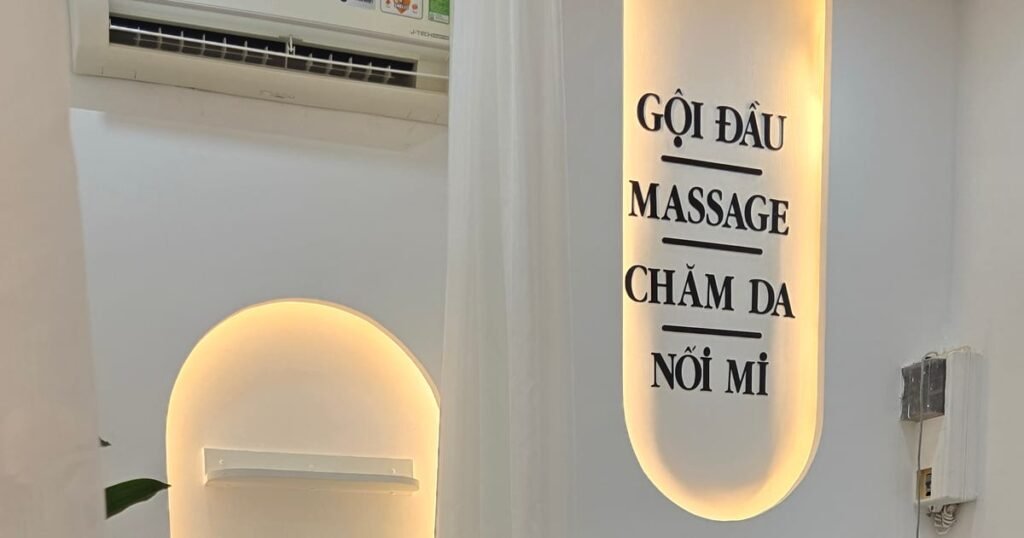

Massage in Vietnam is safe, and most spas are legitimate and excellent value. The three real risks are not physical: venues from the adult trade sharing the same search terms, tip pressure after the session, and valuables left unsecured. All three are avoidable by confirming the price in writing before you start and using a spa with a locker and a printed menu.
The short answer, and the three risks that actually exist
Vietnam has one of the deepest massage cultures in Southeast Asia and one of the best price-to-quality ratios anywhere. A 60-minute body massage at a reputable mid-range spa costs roughly 350,000–450,000 ₫ as of August 2026, and the standard of hands-on work is high. Millions of visitors get a massage here every year without incident.
The risks that do exist are commercial and practical rather than physical. They are the same three risks in Ho Chi Minh City, Hanoi and Đà Nẵng, and each has a single mitigation.
| Risk | What it looks like | The one thing that prevents it |
|---|---|---|
| Venue type | An adult-service venue appearing in the same search results as a therapeutic spa | Check for a printed price menu and a separate reception before you go |
| Price and tip pressure | A bill higher than the menu, or pressure for a large tip afterwards | Confirm the exact price and duration in writing before the session starts |
| Belongings | Phone, wallet or passport left unattended in an open changing area | Use a spa with a locker, or keep valuables in the treatment room with you |
Nothing on this list requires you to be suspicious of Vietnam. It requires you to spend two minutes on a Google Maps listing before you walk in.
Risk 1: the adult trade shares your search terms
Prostitution is illegal in Vietnam. It also exists, and some of it operates under massage signage. That creates a discovery problem rather than a danger: two entirely different businesses compete for the phrase “massage near me”, and a traveler who doesn’t know the signals can end up somewhere they didn’t intend.
The signals are legible once you know them. A therapeutic spa publishes a price menu with fixed durations. It has a reception area you can see from the street, separate from the treatment rooms. Its Google Maps listing has recent photo reviews from a mix of men and women, couples, and often local customers. It does not solicit on the pavement.
The venues that are not therapeutic tend to advertise “VIP”, “body-to-body” or “adult”, have no published prices, keep their windows covered, and sit upstairs with no ground-floor signage. Reviews mention tips, “extras” or being asked for more money. None of this is subtle once you have read a dozen listings.
The practical consequence of walking into the wrong one is embarrassment and a wasted evening, not harm. You can leave, and you owe nothing if the session has not started.
Risk 2: price and tip pressure
This is the risk that actually happens to people, and the one most guides skip.
Two things go wrong at the till. The first is a bill that does not match the menu — usually because the quoted price excluded a service charge of around 5% and VAT, or because a “60-minute” session was priced as 90. The second is pressure for a tip well above what anyone local would give, applied after the session when you are relaxed and want to leave.
Both are prevented by the same habit. Before the session starts, confirm three things: the exact treatment, the exact duration, and the total price including service charge and tax. If you booked over Zalo or Fresha, you already have that in writing and a screenshot settles any dispute. If you walked in, ask at reception and point at the menu.
Tipping in Vietnam is appreciated but not obligatory, and a modest cash amount handed directly to the therapist is the norm — our guide to Vietnamese spa etiquette covers the customs in full. What matters here is the mechanic: a tip is your decision, made after the service, and no reputable venue will press you on it.
If a bill differs from the menu, the menu is what you agreed to. Raise it at reception, calmly, before you pay. For what the numbers should actually look like across the city, see our Ho Chi Minh City massage price guide.
Risk 3: your belongings
You will be face-down and unable to see your things for an hour. Reputable spas solve this and their solution is visible: a locker, a lockable drawer, or a basket that comes into the treatment room with you.
The absence of any of these is itself a signal. A venue that expects you to leave a wallet and passport on an open shelf in a shared changing area has not thought about its customers, whatever else it does well.
Two habits cover it. Keep your phone in the treatment room rather than a locker if that makes you more comfortable — no professional venue will object. And leave your passport at the hotel. You do not need it for a massage, and it is the one item that turns an inconvenience into a genuinely bad week. That is also the UK government’s standing advice for Vietnam.
This is ordinary travel practice rather than a Vietnam-specific warning. The same applies at a gym in Lisbon.
What is not a risk
Several things that worry first-time visitors are not problems at all, and knowing this saves you from avoiding the best value in the country.
Blind massage centers. Venues signed massage khiếm thị are staffed by trained, certified visually-impaired therapists, and they exist because of a long-running social movement to create employment for blind people in Vietnam. The work is skilled and often firmer than a spa massage. Mistaking the signage for something dubious is the most common venue-type error tourists make — our guide to Vietnamese venue types explains the whole landscape.
Marks from cạo gió. Traditional ginger scraping leaves temporary red or purple marks where it is performed. That is the intended result of the technique, not bruising from excessive force, and the marks fade within a few days. Research calls these intentional therapeutic petechiae.
Strong pressure. Traditional Vietnamese massage, tẩm quất, is genuinely firmer than most Western bodywork, and includes percussive technique that can sound alarming through a curtain. You can ask for lighter pressure at any point.
Curtained or shared rooms. Common at budget venues and at blind massage centers, and normal rather than a red flag. Reclining-chair setups are also standard for foot massage in District 1 and elsewhere. If you want a private room with a door, that is a spa, and it costs more.
Is it safe outside the big cities?
The same principles apply across Vietnam, with one difference in density.
In Ho Chi Minh City and Hanoi, both trades are concentrated in the same tourist areas, so signal-reading matters most. In Đà Nẵng, Hội An, Huế and Nha Trang there are proportionally fewer adult-service venues, but also fewer spas with printed English menus and online booking — you will do more of your checking in person and less on Google Maps.
In smaller towns and rural areas, massage is overwhelmingly local trade serving local customers. Prices drop sharply, English drops with them, and the venue is usually exactly what the sign says.
Wherever you are, hotel spas are the lowest-friction option and the highest-priced. If a hotel concierge books it for you, you have removed the discovery problem entirely and paid for the privilege.
What to do if something goes wrong
Nothing here requires drama.
If you have not started, leave. You owe nothing, and you do not have to explain yourself. Say you have changed your mind and walk out.
If the session has started and you want it to stop, say so. A professional therapist will stop immediately. Pay for the time used, at the menu rate, and go.
If the bill is wrong, deal with it at reception rather than in the treatment room, and point at the printed menu. Having the price in a Zalo message makes this a thirty-second conversation.
Afterwards, leave an honest review on the Google Maps listing. In this market, reviews are the enforcement mechanism that actually works — they are how the next traveler reads the signals, and they are what reputable venues genuinely care about.
Frequently asked questions
Is massage in Vietnam safe for tourists?
Yes. Massage in Vietnam is safe and widely used by locals, expats and visitors. The risks that exist are commercial rather than physical: adult-service venues sharing search terms with therapeutic spas, occasional pressure over price or tips, and unsecured belongings. Confirming the price before you start prevents most of them.
Are massage places in Vietnam legit?
The large majority are. A legitimate therapeutic spa publishes a price menu with fixed durations, has a reception separate from treatment rooms, and carries recent photo reviews from mixed clientele on Google Maps. Venues advertising “VIP” or “body-to-body”, or refusing to quote a price, are a different category.
Do I have to tip for a massage in Vietnam?
No. Tipping is appreciated but not obligatory, and it is your decision made after the service. A modest cash amount handed directly to the therapist is the norm. No reputable venue will pressure you, and a venue that does is telling you something about itself.
Is it safe to leave my phone and wallet during a massage?
At a reputable spa, yes — they provide a locker or lockable drawer. You can also keep valuables in the treatment room with you and no professional venue will object. Leave your passport at the hotel; you do not need it for a massage.
What does “body-to-body massage” mean in Vietnam?
It is one of the standard advertising terms used by adult-service venues rather than therapeutic spas, alongside “VIP” and “adult”. A spa offering genuine therapeutic bodywork will describe its treatments by technique — deep tissue, hot stone, aromatherapy — and publish durations and prices.
If you are heading to District 1 specifically, our guide to finding a legitimate massage spa in District 1 covers the street-by-street picture and what a proper first visit looks like. Chạm Spa offers massage in Ho Chi Minh City District 1, near Mạc Đĩnh Chi, with private rooms and published prices across our massage therapies in District 1. You can book online and get the price in writing before you arrive — which is the habit this whole article recommends, wherever you end up going.
If Chạm Spa has looked after you, it helps other guests to hear about it. Leave a review