Massage types differ mainly in how they create release: pressure, heat, movement or aroma. Swedish and aromatherapy use flowing pressure to calm the nervous system. Deep tissue uses slow sustained pressure on specific knots. Hot stone uses penetrating heat instead of force. Thai and shiatsu use stretching and point pressure with you clothed.
The decision table
| Type | How it works | Pressure | Clothed? | Oil? | Best for | Avoid if |
|---|---|---|---|---|---|---|
| Swedish / relaxation | Long flowing strokes over large muscle groups | Light–medium | No | Yes | First massage, switching off, general tension | You want a specific knot released |
| Deep tissue | Slow sustained pressure into a specific area | Firm–very firm | No | Yes | One stubborn knot, chronic tightness | You bruise easily, or are on blood thinners |
| Hot stone | Heated basalt stones let muscle release without force | Light–medium | No | Yes | Widespread stiffness, cold sensitivity | Pregnancy, heat sensitivity, skin conditions |
| Aromatherapy | Swedish technique with essential oils | Light–medium | No | Yes | Stress, sleep, sensory relaxation | Fragrance sensitivity or allergies |
| Thai | Assisted stretching and compression along energy lines | Firm | Yes | No | Inflexibility, joint stiffness | Recent injury, limited mobility |
| Shiatsu | Thumb and palm pressure on specific points | Firm, intermittent | Yes | No | Tension without wanting oil | You want continuous flowing contact |
| Reflexology | Point pressure on feet mapped to the body | Firm | Yes | Light | Tired feet, low commitment, first visit | Foot injuries or open wounds |
| Tẩm quất (Vietnamese) | Acupressure plus percussive technique | Firm–very firm | Usually | Sometimes | The authentic local experience | You want gentle |
| Sports | Targeted work around training loads | Firm | Partly | Yes | Pre- or post-event, specific muscle groups | You want to relax rather than recover |
| Lymphatic drainage | Very light rhythmic strokes toward lymph nodes | Very light | No | Light | Fluid retention, post-travel puffiness | You expect it to feel like a massage |
Sort by what you actually want
Most guides sort by modality name, which is useless if you do not already know the names. Sort by outcome instead.
One stubborn knot between the shoulder blades → deep tissue massage. Slow, sustained pressure held on the point until it gives.
Widespread stiffness, or you feel the cold → hot stone therapy massage. Heat reaches what hands alone cannot, and most people find it more comfortable than being pressed harder.
You cannot switch off → relaxation massage with oil. Broad, flowing, aimed at the nervous system rather than any particular muscle.
Warmth plus something for your skin → warm candle relaxation massage. Warm oil poured continuously as the massage goes on.
Tension only above the mid-back → deep tissue neck and shoulder massage. The whole session spent where the problem is.
You are pregnant → pregnancy massage, side-lying with cushion support, generally from the second trimester. A review of pregnancy massage trials backs the lateral position from 12 weeks.
Tired feet after a day of walking → foot massage in District 1. The lowest-commitment treatment there is and the fastest way to judge a therapist.
You are stiff and inflexible → Thai massage. See the note below on availability.
You have never had a massage → Swedish or relaxation, every time. Nothing about it is intense or surprising, and you can escalate later once you know what you like.
Pressure-based: Swedish, deep tissue and sports
Swedish and relaxation massage
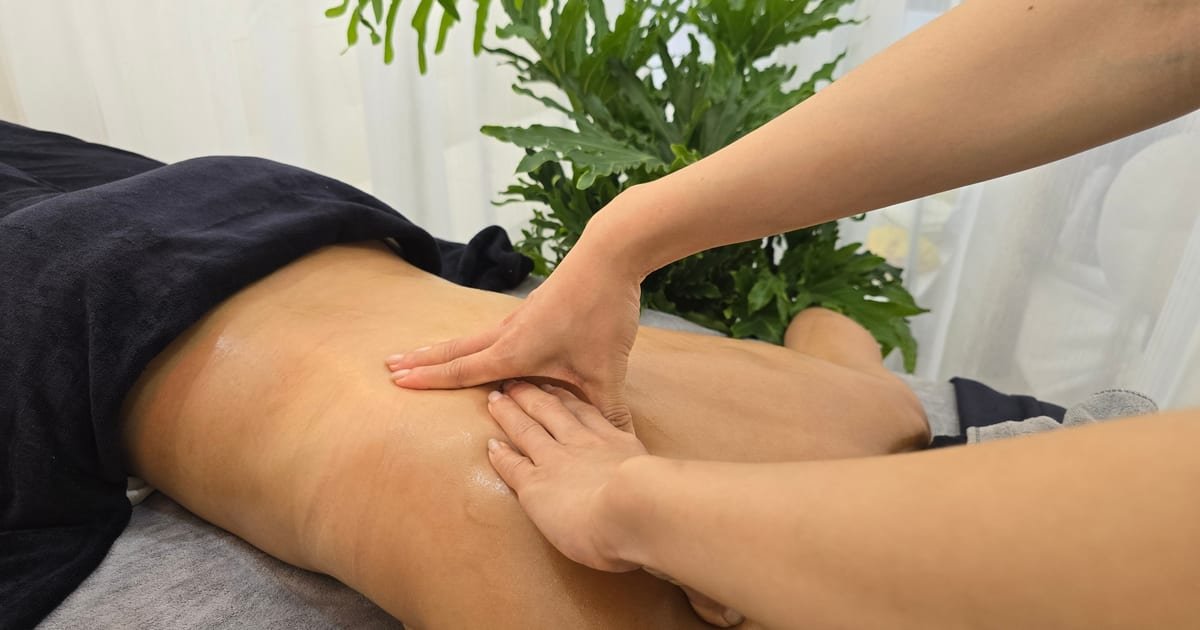
The default worldwide, and the one most people mean by “a massage”. Long gliding strokes, kneading, and light percussion over large muscle groups, performed with oil on bare skin under a sheet.
The intent is systemic rather than local — it works on the nervous system as much as the muscles, which is why people fall asleep during it. Sixty minutes covers the back, legs and arms comfortably; ninety covers everything without rushing.
Firmness is adjustable throughout. A Swedish massage delivered firmly is still a Swedish massage; it does not become deep tissue.
Deep tissue massage
Slow, sustained pressure applied to a specific area rather than broad coverage. The therapist works into a knot or trigger point and holds until the tissue releases, which takes far longer than most people expect — sometimes a minute on one spot.
It should be intense but not agonising. The distinction matters: productive discomfort is a deep ache you can breathe through, while sharp pain means the pressure is wrong and you should say so.
Mild soreness for a day afterwards is normal and is not injury. Ninety minutes is the better booking for a first deep tissue session, because rushing it produces the soreness without the release.
Sports massage
Targeted work built around training rather than relaxation, usually focused on a few muscle groups relevant to a specific activity. Pre-event work is brisk and stimulating; post-event is slower and more like deep tissue. Rarely a full-body treatment.
Heat-based: hot stone and warm candle
Heat does something pressure cannot. Warm tissue releases gradually rather than being forced, which means a therapist can reach deeper structures without the discomfort of pressing harder.
Hot stone uses smooth heated basalt placed on the body and used as an extension of the therapist’s hands. It suits widespread stiffness better than any single-point technique, and people who find deep tissue too intense usually get on with it far better. Not used during pregnancy.
Warm candle massage pours warm, skin-conditioning oil continuously through the session — gentler than hot stone, with a skincare element.
Both are covered in detail on our massage therapies in District 1 page.
Movement-based: Thai and shiatsu
Thai massage
Performed on a mat with you fully clothed, and closer to assisted yoga than to Western massage. The therapist uses hands, forearms, knees and feet to compress along energy lines and to move you through a sequence of stretches. No oil, no undressing, and considerably more physically involving than lying still for an hour.
It suits inflexibility and joint stiffness better than anything else on this list, and it suits people with acute injuries very poorly.
A note on availability: Thai massage and four-hands massage are explained here for comparison. Chạm Spa does not offer either. If assisted stretching is what you are after, you will need a dedicated Thai massage venue. If what you actually want is firm, targeted work on tight muscles — which is what most people mean when they ask for Thai — deep tissue massage is the closer fit.
Shiatsu
Japanese in origin, clothed, and built on thumb and palm pressure applied to specific points along the body rather than continuous strokes. The rhythm is intermittent: press, hold, release, move.
People who dislike the sensation of oil on skin, or who find continuous contact overstimulating, often prefer shiatsu to anything oil-based.
Reflexology
Point pressure applied to the feet, based on a map linking areas of the foot to the rest of the body. Whether that map reflects anything anatomical is contested; what is not contested is that it feels excellent and that tired feet respond to it dramatically. NCCIH says the reflexology map has not been proven.
Practically, it is the cheapest and lowest-commitment treatment at almost any venue, done in a reclining chair with your clothes on. That makes it the sensible way to test a spa before booking a full body session there.
Aromatherapy
Swedish technique performed with essential oils selected for their scent and their claimed properties. Lavender and chamomile for winding down, citrus and peppermint for alertness, eucalyptus for congestion.
The honest position: the massage does the work and the scent shapes how the hour feels. That is worth having — the sensory element genuinely changes the experience — but it is not medicine, and any venue telling you an oil will cure something is overselling.
Tell the therapist about fragrance sensitivities or allergies before they start.
Traditional Vietnamese: tẩm quất
Vietnam’s own tradition, built on acupressure and percussive technique rather than long strokes. Firm, often clothed, frequently on a mat, and accompanied by rhythmic tapping that startles first-timers hearing it through a curtain.
It is the everyday massage of Vietnam and the one locals actually get, at prices locals actually pay. Our guide to traditional Vietnamese massage covers the technique and its history properly.
When you should not book a massage
Massage is safe for most people most of the time. US federal health researchers put the risk of harm from massage as low. The exceptions are worth knowing, and none of this replaces asking a doctor about your own situation.
- Fever or an active infection. Wait until it has passed.
- A recent injury, in the first 48–72 hours. Ice and rest first.
- Blood-thinning medication. Tell the therapist; firm work may need to be lighter.
- First trimester of pregnancy. Most venues start from the second trimester. Heat treatments are not used at any stage. See pregnancy massage.
- Skin conditions, sunburn or open wounds in the treatment area. The area gets skipped rather than the session canceled.
- Recent surgery. Ask your surgeon rather than the spa.
- Deep vein thrombosis, or a history of clots. Speak to a doctor first.
Tell your therapist anything relevant at the intake conversation. That is what it is for, and a good one would far rather move you to a different treatment than deliver the wrong one well.
Frequently asked questions
What is the difference between Thai and Swedish massage?
Thai massage is performed clothed on a mat, using assisted stretching and compression along energy lines, with no oil. Swedish massage is performed on a table with oil on bare skin under a sheet, using long flowing strokes. Thai suits inflexibility; Swedish suits relaxation and general tension.
Which massage is best for back pain?
Deep tissue for a specific knot or chronic tight spot, and hot stone for widespread stiffness across the whole back. If the pain is from prolonged sitting, targeted neck and shoulder work often addresses the cause better than working the lower back directly. Persistent back pain warrants a doctor rather than a spa.
Is deep tissue massage supposed to hurt?
It should be intense but not agonising. Productive discomfort is a deep ache you can breathe through steadily. Sharp pain, or holding your breath, means the pressure is too much — say so, and a professional therapist will ease off immediately. Mild soreness the next day is normal.
What type of massage should I get if I’ve never had one?
Swedish or relaxation massage with oil. The pressure is gentle, nothing about it is surprising, and it is the treatment therapists most often recommend to first-timers. Sixty minutes is plenty. You can try firmer or more specialized treatments later once you know what your body responds to.
What is the difference between deep tissue and hot stone massage?
Deep tissue uses slow sustained pressure to work directly on specific knots. Hot stone uses penetrating heat so that muscle releases gradually rather than being forced, which most people find more comfortable. Choose deep tissue for one stubborn area, hot stone for widespread stiffness.
How often should you get a massage?
For general wellbeing, once a month suits most people. For a specific problem area, weekly or fortnightly for three or four sessions works better than one long session, because tissue responds to repetition more than to duration. During travel, whenever your feet or shoulders demand it.
Chạm Spa is a spa in District 1, Ho Chi Minh City near Mạc Đĩnh Chi, offering six massage therapies in District 1 — relaxation, deep tissue, neck and shoulder, hot stone, warm candle and pregnancy — plus separate foot treatments. Every session begins with a conversation about what your body needs. Book online. We are closed on Tuesdays.
If Chạm Spa has looked after you, it helps other guests to hear about it. Leave a review